
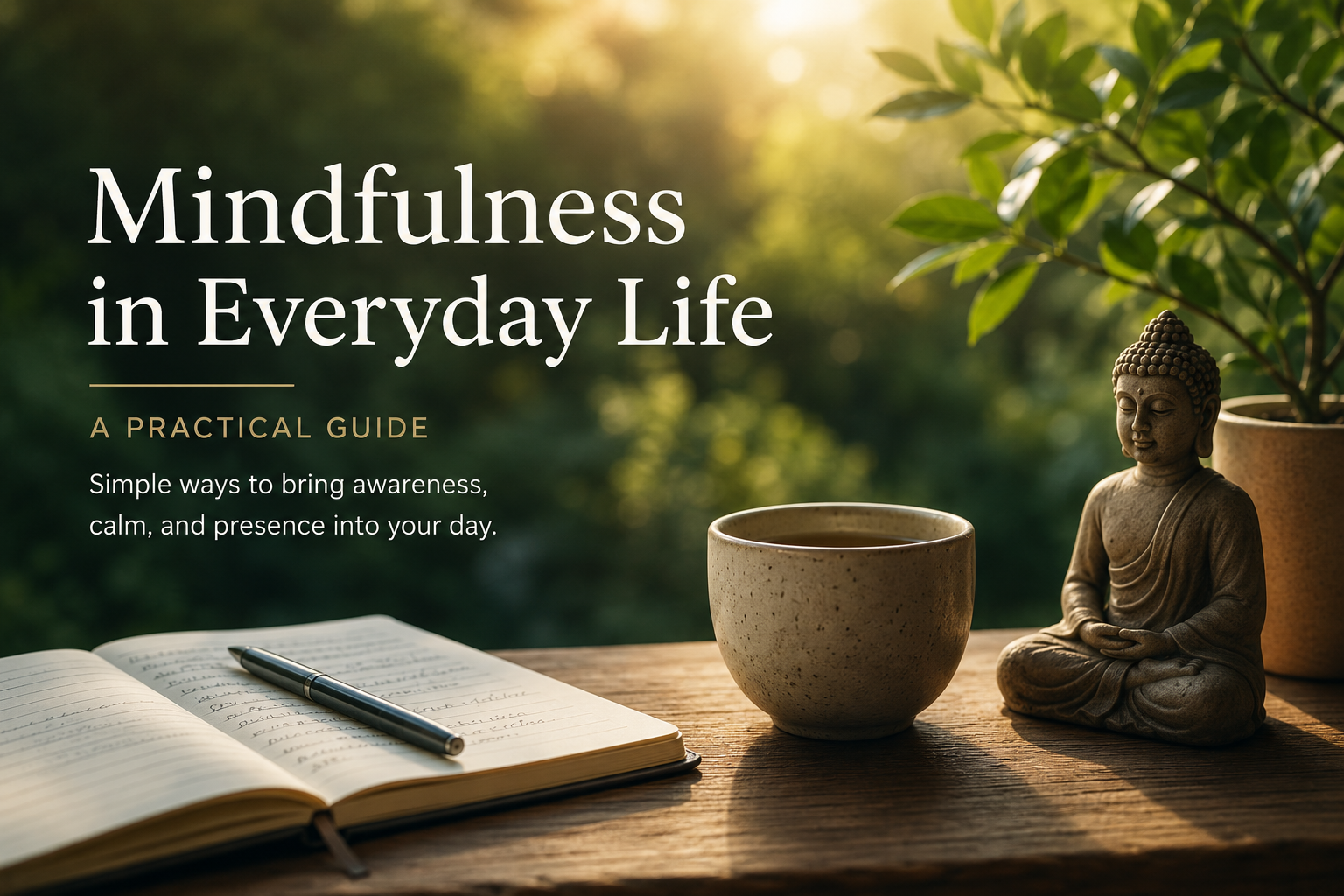
Life often feels like it moves faster than we can keep up. We rush through breakfast while checking our phones, think about tomorrow during today’s conversations, and arrive home wondering where the day went. Even moments that should bring joy can pass unnoticed because our attention is somewhere else.
Many people believe mindfulness means emptying the mind or achieving constant calm. In reality, mindfulness is much simpler—and much more practical.
In Buddhism, mindfulness is the practice of paying attention to the present moment with openness, curiosity, and without unnecessary judgment. Rather than trying to escape daily life, mindfulness helps you experience it more fully.
The good news is that you don’t need hours of meditation or a silent retreat to begin. Mindfulness can become part of almost everything you already do.
What Is Mindfulness?
Mindfulness is the ability to notice what is happening right now—your thoughts, emotions, physical sensations, and surroundings—without immediately reacting to them.
Buddhist teachings describe mindfulness as a way of seeing experience clearly. Instead of becoming lost in worries about the future or regrets about the past, you learn to return your attention to what is actually happening in this moment.
This doesn’t mean your mind will never wander. Everyone’s mind wanders. Mindfulness is simply the practice of noticing when it does and gently bringing your attention back.
Like any skill, it becomes stronger with practice.
Why Is It So Difficult to Stay Present?
Our minds naturally jump from one thought to another.
We replay conversations, imagine future scenarios, worry about problems that haven’t happened, and relive situations we cannot change. Modern technology often makes this even harder, constantly competing for our attention.
Buddhism teaches that much of our suffering comes from becoming attached to these mental stories instead of experiencing life directly.
Mindfulness interrupts this habit. It creates a small pause between what happens and how we respond, allowing us to act with greater clarity instead of reacting automatically.
Bringing Mindfulness Into Everyday Life
One of the biggest misconceptions about mindfulness is that it only happens during meditation.
Formal meditation is one way to train the mind, but everyday life is where mindfulness truly becomes part of who you are.
You can practice mindfulness while:
- drinking your morning coffee without checking your phone
- walking and noticing the sensations of each step
- listening to someone without planning your reply
- washing dishes with your full attention
- driving without mentally replaying yesterday’s problems
- taking a slow breath before responding during a difficult conversation
These moments may seem ordinary, but together they gradually change how you experience your day.
Mindfulness isn’t about making life extraordinary. It’s about becoming fully present for the ordinary moments that often pass unnoticed.
Mindfulness and Meditation
Meditation and mindfulness are closely connected, but they are not exactly the same.
Meditation is dedicated practice. It creates the conditions for developing mindfulness in a calm, intentional setting.
Mindfulness is how you carry that awareness into the rest of your life.
Think of meditation as training in the gym. Everyday mindfulness is using that strength in real-world situations.
Even a short daily meditation practice can make it easier to stay calm, focused, and present throughout the day.
Common Obstacles
Many beginners think they’re “bad” at mindfulness because they become distracted.
In reality, noticing that you’ve become distracted is already mindfulness.
You don’t need to stop thinking or eliminate emotions. The goal isn’t to have a perfectly quiet mind but to develop a different relationship with your thoughts.
Some days will feel easier than others. What matters is returning to the present again and again with patience.
Small moments of awareness practiced consistently are more valuable than occasional attempts at perfection.
Continue Your Practice with Buddha Wisdom
Reading about mindfulness is a helpful first step, but mindfulness grows through regular practice.
The Buddha Wisdom app helps you build that habit with guided meditations, daily Buddhist readings, mindful reflections, and structured learning journeys designed for beginners.
Whether you’re starting a meditation practice or simply looking for more presence in everyday life, these tools can help you gradually bring Buddhist wisdom into your daily routine.
Final Reflection
Mindfulness doesn’t ask you to change your life overnight.
It simply invites you to be fully present for the life you’re already living.
Each time you pause, notice your breath, truly listen, or return your attention to the present moment, you’re strengthening a skill that can bring greater clarity, compassion, and peace into every part of your day.
The present moment is always available. Mindfulness is learning to notice it.