Meditation is one of the practices most closely associated with Buddhism. Today, millions of people meditate to reduce stress, improve focus, or support their mental well-being.
While these benefits are real, Buddhist meditation has a broader purpose.
Rather than simply helping us feel calmer, Buddhist meditation is a way of understanding the mind. It helps us become more aware of our thoughts, emotions, and habits so that we can respond to life with greater wisdom, compassion, and clarity.
If you’re new to Buddhism, meditation can seem mysterious or intimidating. The good news is that it doesn’t require special abilities, religious beliefs, or years of experience.
Like any skill, meditation develops gradually through regular practice.
What Is Buddhist Meditation?
Buddhist meditation includes a variety of meditation practices developed to cultivate mindfulness, concentration, compassion, and insight.
Unlike meditation techniques that focus solely on relaxation, Buddhist meditation aims to help practitioners better understand the nature of the mind and the causes of suffering.
By observing thoughts and emotions without immediately reacting to them, we begin to recognize habits that create stress, attachment, and dissatisfaction.
Over time, this awareness creates space for wiser and more compassionate responses.
Meditation is therefore not an escape from everyday life—it is a way of engaging with life more consciously.
Why Do Buddhists Meditate?
The Buddha taught meditation as one part of a broader path toward freedom from suffering.
Rather than trying to suppress thoughts or achieve a permanently peaceful state, meditation helps develop qualities such as:
- mindfulness,
- concentration,
- patience,
- compassion,
- wisdom,
- emotional balance.
These qualities support us not only during meditation but also in conversations, relationships, work, and everyday challenges.
In Buddhism, meditation is closely connected to ethical living and wise understanding. Together, they form the foundation of personal transformation.
Is Buddhist Meditation About Emptying the Mind?
One of the most common misconceptions is that meditation means stopping all thoughts.
In reality, thoughts continue to arise.
The practice is not about forcing the mind to become blank but about changing how we relate to our thoughts.
Instead of becoming carried away by every idea or emotion, we learn to notice them with curiosity and without immediate judgment.
This simple shift often leads to greater calm and clarity over time.
The Main Buddhist Meditation Techniques
Although Buddhist traditions include many meditation practices, most beginners benefit from understanding three broad approaches.
Samatha (Calm Abiding)
Samatha meditation develops concentration and mental stability.
Practitioners often focus on a single object, such as the breath, allowing the mind to become calmer and less distracted.
As concentration deepens, many people experience greater relaxation, emotional balance, and sustained attention.
Samatha provides a stable foundation for deeper meditation practices.
Vipassanā (Insight)
Vipassanā means “insight” or “clear seeing.”
Rather than concentrating on one object, practitioners observe thoughts, emotions, bodily sensations, and experiences as they naturally arise.
This practice helps develop a direct understanding of impermanence, attachment, and the changing nature of experience.
Vipassanā encourages seeing reality more clearly rather than reacting automatically.
Loving-Kindness (Metta)
Metta meditation focuses on cultivating goodwill toward ourselves and others.
Practitioners silently repeat phrases wishing happiness, peace, health, and freedom from suffering for themselves, loved ones, strangers, and even difficult people.
Over time, this practice helps reduce resentment and strengthens compassion.
Do You Need to Be Buddhist to Meditate?
No.
Many people benefit from Buddhist meditation without identifying as Buddhists.
The practices themselves are open to anyone who wishes to cultivate greater awareness and compassion.
At the same time, understanding the broader Buddhist teachings can provide valuable context and help explain why these practices have been developed and refined over thousands of years.
How to Practice Buddhist Meditation
Beginning meditation does not require complicated equipment or long sessions.
A simple routine is often the most sustainable.
You can begin by:
- finding a quiet place,
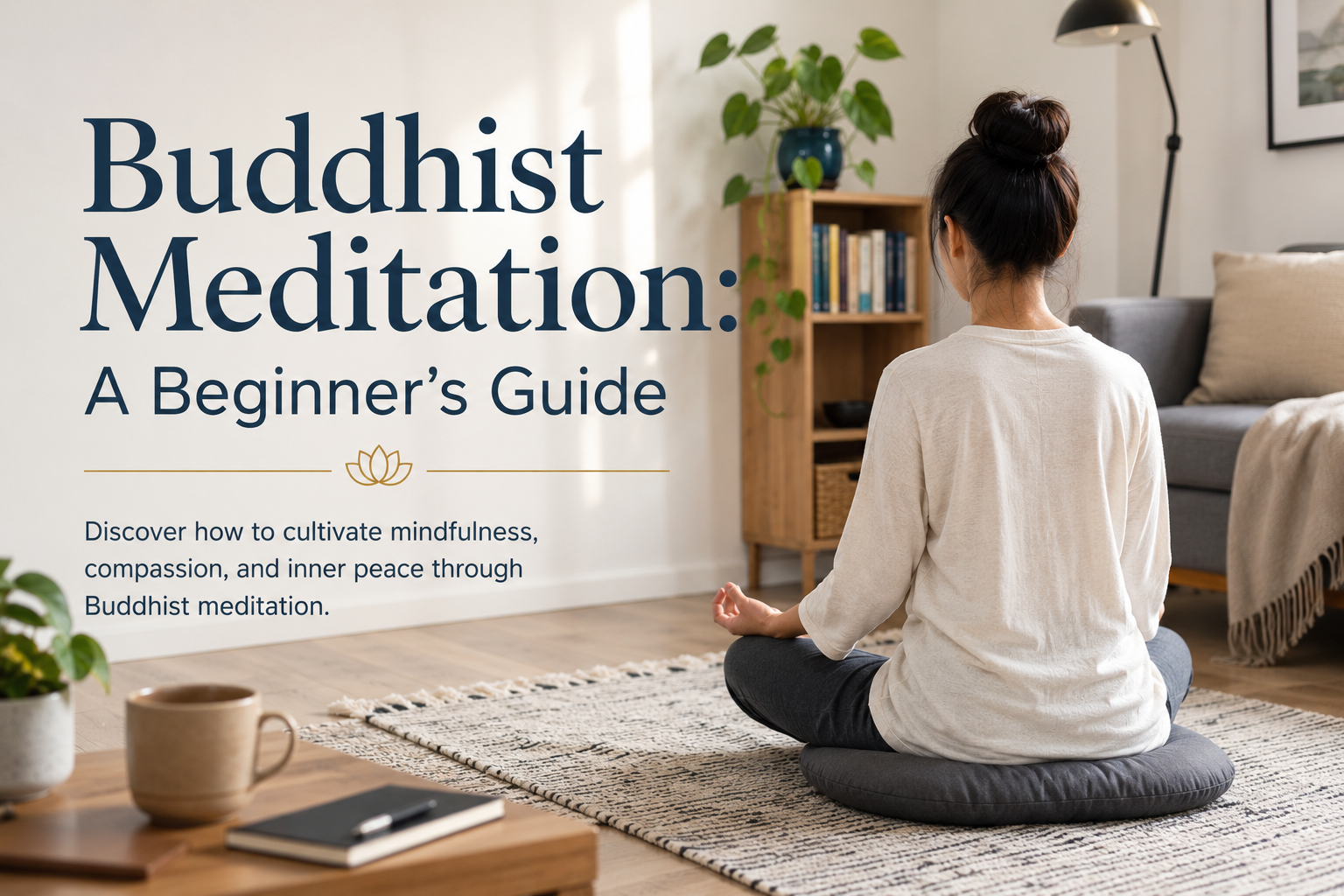
- sitting comfortably with an upright posture,
- focusing gently on your breathing,
- noticing when the mind wanders,
- calmly returning your attention to the breath.
Even five to ten minutes each day can become a meaningful foundation.
Consistency matters far more than duration.
Zazen is a Zen Buddhist form of seated practice that emphasizes stable posture, natural breathing, and attentive presence. Our beginner’s guide to Zen Buddhism explains how zazen fits within the wider Buddhist path.
Common Challenges for Beginners
Nearly everyone encounters difficulties when starting meditation.
Some common experiences include:
“My mind won’t stop thinking.”
This is completely normal. The goal is not to eliminate thoughts but to notice them without becoming lost in them.
“I can’t sit still.”
Physical discomfort often improves with practice. You can also meditate while sitting in a chair or even while walking.
“I’m doing it wrong.”
There is rarely a perfect meditation session.
Every time you gently return your attention after becoming distracted, you are practicing meditation successfully.
Learning to begin again is itself an important part of the practice.
Building a Sustainable Practice
Many people meditate enthusiastically for a few days before stopping altogether.
Instead of aiming for perfection, it is often better to build a small habit that fits naturally into daily life.
For example:
- meditate for five minutes after waking up,
- practice at the same time each day,
- create a quiet space that encourages consistency,
- approach each session with curiosity rather than expectation.
Small, regular sessions are more valuable than occasional long ones. Many beginners find that practicing Buddhist meditation in the morning helps establish a consistent daily routine.
Over time, meditation becomes less about completing a task and more about cultivating a different way of relating to everyday experience.
How Meditation Fits Into Buddhism
Meditation is only one part of Buddhist practice.
It works together with ethical living and wisdom.
For example, qualities such as kindness, honesty, generosity, and compassion support a calmer mind, while meditation helps us become more aware of how these qualities influence our lives.
In the Noble Eightfold Path, meditation is closely connected with Right Effort, Right Mindfulness, and Right Concentration, while also being supported by teachings such as Right Intention and the Four Noble Truths.
Together, these practices encourage lasting personal growth rather than temporary relaxation.
Where to Begin
You do not need to understand every aspect of Buddhism before beginning to meditate.
Start with a few quiet minutes each day.
Observe your breath.
Notice your thoughts with kindness.
Allow the practice to develop naturally over time.
The Buddha Wisdom app includes a Beginner Meditation Journey, a library of guided meditations, and daily meditation practices designed to help you build confidence step by step. Whether your goal is greater mindfulness, emotional balance, or a deeper understanding of Buddhist teachings, a regular meditation practice can become a meaningful part of everyday life.