
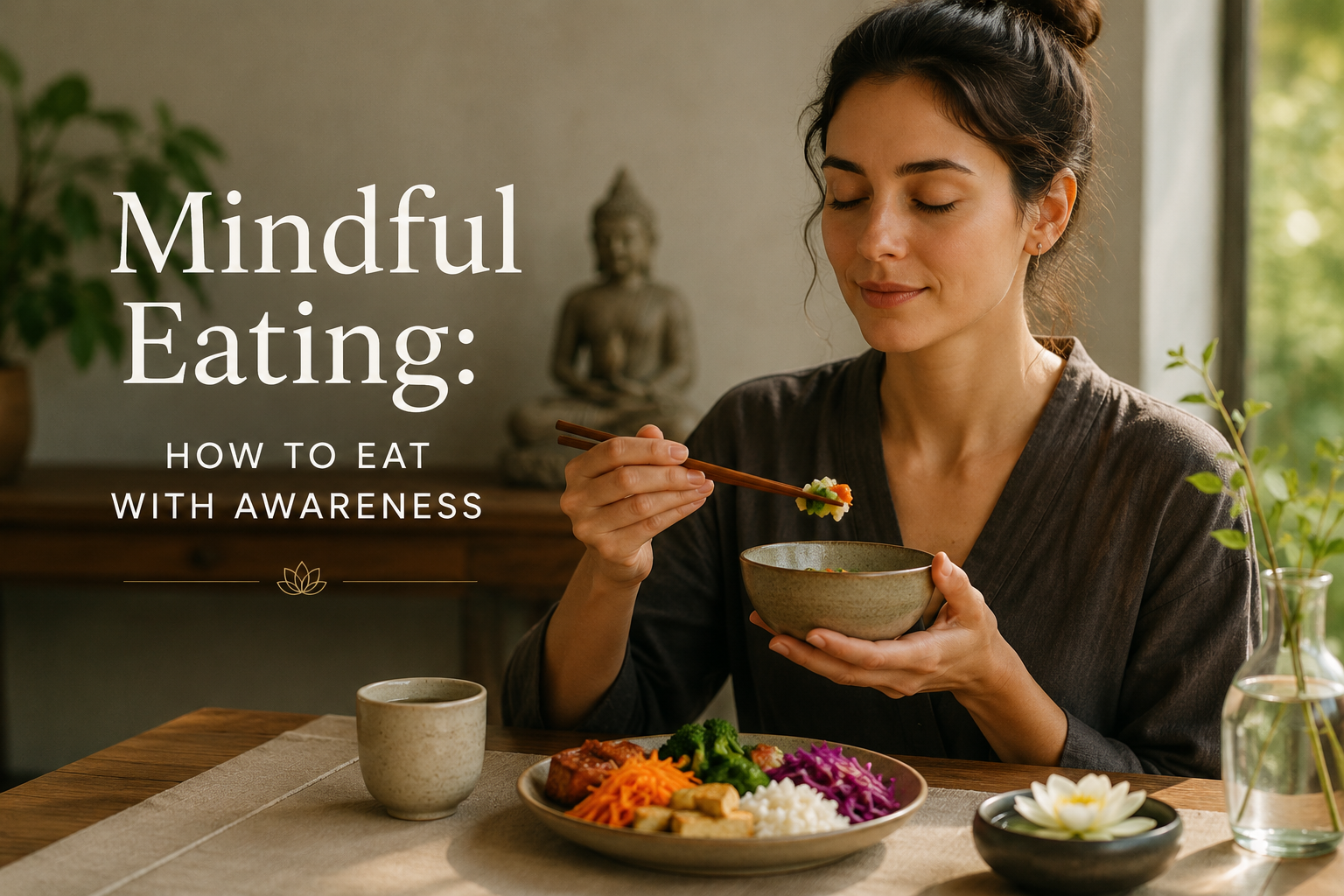
Have you ever finished a meal and realized you barely tasted it?
Many of us eat while scrolling through our phones, working at our desks, or thinking about everything we still need to do. Meals become another task to complete rather than a chance to nourish ourselves.
Buddhism encourages a different approach. Mindful eating isn’t about following a special diet or restricting certain foods. It’s about bringing your full attention to the experience of eating, helping you appreciate your food, recognize your body’s signals, and become more present in everyday life.
Like mindfulness itself, mindful eating is a practice. Each meal offers a new opportunity to slow down and reconnect with the present moment.
What Is Mindful Eating?
Mindful eating means giving your full attention to the experience of eating.
Instead of rushing through a meal on autopilot, you notice the colors, smells, textures, and flavors of your food. You become aware of your body’s hunger and fullness, as well as the thoughts and emotions that may influence your eating habits.
In Buddhism, eating is seen as another opportunity to practice mindfulness. Every bite becomes a reminder to return to the present instead of being carried away by distractions or worries.
The goal isn’t to eat perfectly. It’s simply to become more aware.
Why Do We Eat Without Paying Attention?
Modern life makes distracted eating almost effortless.
We eat while watching television, answering emails, driving, or scrolling through social media. Sometimes we eat because we’re stressed, bored, or anxious rather than physically hungry.
When our attention is somewhere else, we often miss the simple experience of eating altogether.
Mindfulness helps interrupt these automatic habits. By slowing down, we become more aware of why we’re eating, how our body feels, and whether we’re truly hungry or simply reacting to emotions or routine.
How to Practice Mindful Eating
Mindful eating doesn’t require changing what you eat. It begins with changing how you eat.
Try practicing these simple habits:
- Take a slow breath before your first bite.
- Put away your phone or other distractions during meals.
- Notice the appearance, aroma, and texture of your food.
- Chew slowly and pay attention to each bite.
- Pause occasionally to notice whether you’re still hungry.
- Appreciate the people, nature, and effort that made your meal possible.
You don’t have to do this at every meal. Even practicing once a day can help you build greater awareness over time.
More Than Food
Mindful eating isn’t only about nutrition.
It’s an opportunity to strengthen the same mindfulness you practice during meditation and carry it into everyday life.
Every meal becomes a chance to pause, slow down, and reconnect with the present moment.
Over time, this habit can help reduce mindless eating, improve appreciation for food, and make everyday routines feel calmer and more intentional.
Common Misunderstandings
Some people believe mindful eating means eating slowly all the time or following strict rules.
It doesn’t.
There are no perfect meals and no perfect way to practice. Some days you’ll forget, rush through lunch, or become distracted—and that’s completely normal.
The practice begins the moment you notice your attention has wandered and gently return to the meal in front of you.
Every meal is simply another opportunity to begin again.
Continue Your Practice with Buddha Wisdom
Mindful eating is just one way to bring mindfulness into daily life.
The Buddha Wisdom app helps you continue your practice with guided meditations, daily Buddhist readings, mindfulness exercises, and structured learning journeys that make Buddhist teachings practical and accessible.
Small moments of awareness, practiced consistently, can gradually transform the way you experience not only meals, but your entire day.
Final Reflection
Eating is something we do every day, often without thinking.
Mindful eating invites us to slow down and give this ordinary activity our full attention.
Each meal becomes more than nourishment for the body—it becomes an opportunity to cultivate presence, gratitude, and mindfulness, one bite at a time.