
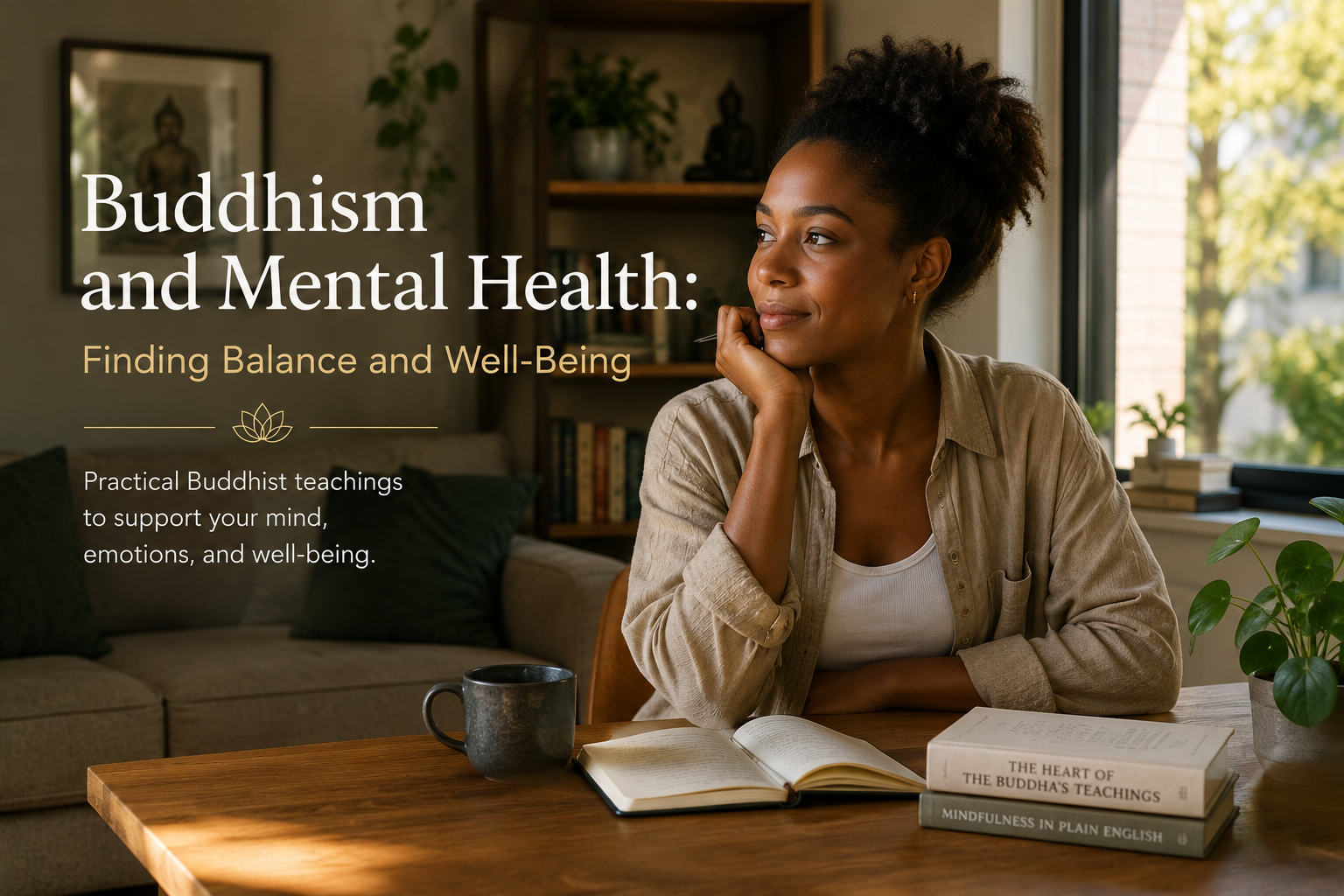
Mental health has become one of the most important conversations of our time. Many people struggle with stress, anxiety, low mood, or emotional exhaustion while trying to balance work, relationships, and everyday responsibilities.
It’s natural to look for ways to feel calmer and more resilient. For some, that search leads to Buddhism.
Buddhism doesn’t offer a quick fix or promise a life free from emotional pain. Instead, it provides practical teachings that help us understand the mind, respond to difficult emotions with greater wisdom, and cultivate habits that support lasting well-being.
While these practices can be deeply beneficial, they are not a substitute for professional mental health care. If you’re experiencing persistent emotional distress or a mental health condition, seeking support from a qualified healthcare professional is important. Buddhist practice can complement that care, but it should not replace it.
Understanding the Mind in Buddhism
Buddhism teaches that our experience of life is shaped not only by what happens to us but also by how our minds respond to those experiences.
We often become caught in cycles of worry, self-criticism, attachment, or fear. These mental habits can amplify suffering, even when external circumstances haven’t changed.
Rather than judging ourselves for having difficult thoughts or emotions, Buddhism encourages us to observe them with awareness and compassion. By seeing our mental patterns more clearly, we become less controlled by them.
This shift doesn’t eliminate life’s challenges, but it changes our relationship with them.
How Mindfulness Supports Mental Well-Being
Mindfulness is one of Buddhism’s best-known practices, and for good reason.
Instead of becoming lost in thoughts about the past or future, mindfulness helps us return our attention to the present moment. This simple practice can create space between an experience and our reaction to it.
When practiced regularly, mindfulness may help you:
- become more aware of your thoughts and emotions
- respond to stress more calmly
- reduce automatic reactions
- develop greater emotional resilience
- cultivate a stronger sense of presence
Mindfulness doesn’t ask you to suppress emotions or always feel positive. Instead, it teaches you to acknowledge your experience without immediately being overwhelmed by it.
Compassion Begins with Yourself
Many people find it easier to show kindness to others than to themselves.
Buddhism reminds us that compassion includes ourselves as well. Self-compassion isn’t about ignoring mistakes or avoiding responsibility. It’s about responding to personal struggles with the same patience and understanding we would offer a close friend.
Practices such as Loving-Kindness (Metta) meditation encourage us to gradually cultivate goodwill toward ourselves and others, helping reduce harsh self-judgment and strengthen emotional balance.
Small Daily Practices That Make a Difference
Supporting your mental well-being doesn’t always require dramatic changes.
Small, consistent habits often have a greater long-term impact than occasional intensive efforts.
You might begin by:
- taking a few mindful breaths before starting your day
- spending five or ten minutes in meditation
- practicing gratitude during meals
- noticing difficult thoughts without immediately believing them
- treating yourself with greater patience during stressful moments
Over time, these practices help create a calmer relationship with your thoughts and emotions.
Buddhism and Professional Mental Health Care
Buddhist practice and modern mental health care can work well together.
Meditation, mindfulness, and compassion practices may support emotional well-being, while psychologists, psychiatrists, and other mental health professionals provide evidence-based assessment and treatment when needed.
Seeking professional help is not a sign of failure, nor is it incompatible with Buddhist practice. Taking care of your mental health is an act of wisdom and compassion.
Continue Your Practice with Buddha Wisdom
Understanding Buddhist teachings is only the beginning. Lasting change comes through regular practice.
The Buddha Wisdom app helps you build healthy habits with guided meditations, daily Buddhist readings, mindfulness exercises, and structured learning journeys that make ancient wisdom practical for modern life.
Whether you’re looking to reduce stress, develop greater emotional awareness, or simply find more balance in your day, consistent practice can help you move forward one step at a time.
Final Reflection
Mental well-being isn’t about never experiencing stress, sadness, or uncertainty.
It’s about learning to meet life’s challenges with greater awareness, compassion, and resilience.
Buddhism offers practical tools to support that journey—not by promising a perfect mind, but by helping us develop a wiser and kinder relationship with the one we already have.